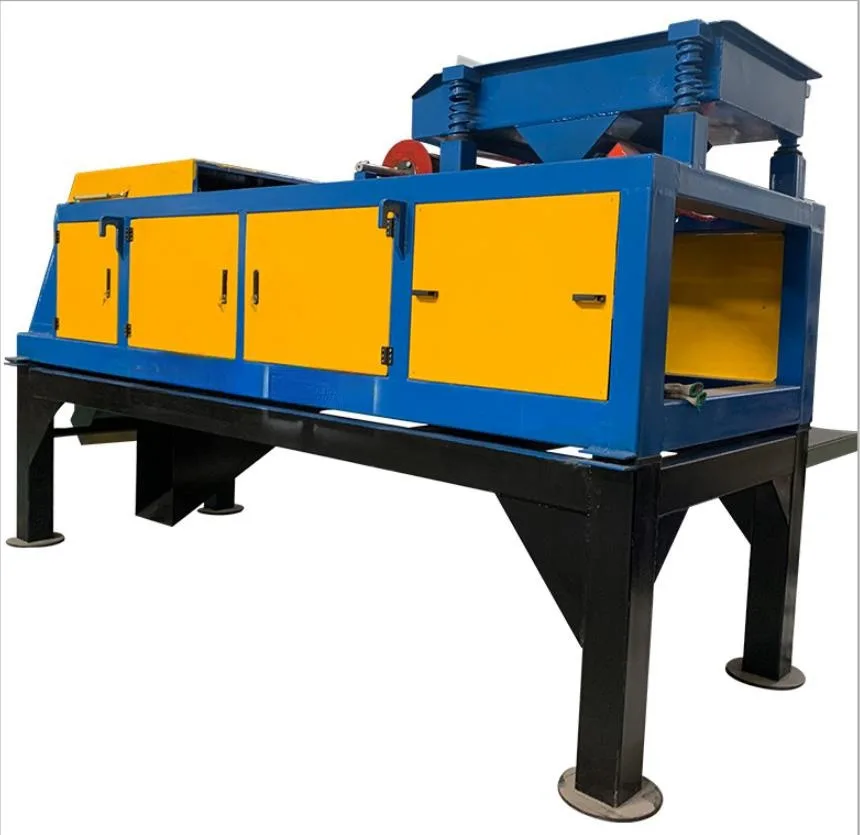
Magnetic separation is a crucial work in modern font stuff processing, used to part valuable minerals from run off materials, thereby improving the and profitability of minelaying trading operations. This work relies on the attractable properties of minerals, with ferrous and magnet minerals being attracted to magnetic Fields. Various types of MAGNETIC SEPARATORS are made use of depending on the characteristics of the material being refined and the craved final result. In this clause, we will search the different types of MAGNETIC SEPARATORS and their life-sustaining role in modern stuff processing.
Introduction to Magnetic Separation
Magnetic separation is a method acting of separating minerals based on their attractable susceptibleness. It is unremarkably used in the mining, recycling, and food industries to transfer ferrous and sometimes non-ferrous contaminants from materials. In material processing, MAGNETIC SEPARATORS are used to split valuable minerals from gangue, meliorate ore pureness, and heighten the retrieval of fine particles. Magnetic legal separation can be achieved through the use of permanent wave magnets or electromagnets, with each offer different advantages.
Types of Magnetic Separators
Magnetic separators can be loosely classified into two types: wet MAGNETIC SEPARATORS and dry MAGNETIC SEPARATORS. Within these categories, there are several types of separators based on the strength of the magnetized domain and their design.
1. Drum Magnetic Separators
One of the most usually used MAGNETIC SEPARATORS, drum separators consist of a rotating drum that is enclosed by a magnetic arena. They can be either wet or dry, depending on the practical application.
-
Wet Drum Separators: Typically used for separating fine magnetic attraction materials from slurries in material processing, these separators are most effective when the stuff has high water content. The slurry flows over the drum while the magnetized arena pulls the magnetised particles to the drum's rise up, separating them from non-magnetic materials.
-
Dry Drum Separators: These are used for the separation of dry materials. They are often exploited in industries where moisture levels need to be kept to a minimum, such as in coal and iron ore processing.
2. Overband Magnetic Separators
Overband MAGNETIC SEPARATORS, also known as cross-belt MAGNETIC SEPARATORS, are designed to be mounted above transporter belts. These separators are used to remove ferrous contaminants from bulk materials that are being transported by conveyor belt systems. They are unremarkably used in applications where the stuff is being stirred in a unbroken flow, such as in minelaying operations, recycling plants, and manufacturing.
This type of magnetized separator is particularly operational in removing large, strongly magnetized materials, including pieces of metal that could damage equipment downriver. The separator’s attraction is positioned above the conveyor belt, and as materials move below the attractive feature, metallic element objects are attracted to it and removed from the flow.
3. High-Intensity Magnetic Separators(HIMS)
High-intensity MAGNETIC SEPARATORS are used when very fine, weak magnetic materials need to be distributed from a bulk material. These separators use stronger magnetised Fields to pull in and transfer paramagnetic particles, which are only decrepit attracted to a attractable domain.
HIMS are typically used in the legal separation of minerals like garnet, rutile, and ilmenite from waste materials. These separators are essential in the processing of non-ferrous ores, industrial minerals, and even recycling streams, where fine legal separation is material to maximize the retrieval of worthful minerals.
4. Magnetic Roll Separators
Magnetic roll separators are used for the separation of debile magnetized or paramagnetic materials from non-magnetic materials. These separators boast one or more magnetic rolls, which make a attractable orbit that attracts magnetic particles as the stuff passes over the roll. They are nonsuch for processing fine or dry materials and are usually used in the product of material littoral, silicon dioxide, and other heavy-duty minerals.
The magnetic roll separator works by exploiting the remainder in magnetized susceptibleness between different minerals, allowing for high-precision separation. These are particularly effective in applications where fine and even separation of moderate particles is necessary.
5. Eddy Current Separators
Eddy current separators are specialized MAGNETIC SEPARATORS used to remove non-ferrous metals, such as atomic number 13, copper, and brass, from materials like pliant, rubberize, and glass. The rule behind eddy stream legal separation involves the trigger of eddy currents in conducting materials as they pass through a rotating magnetised arena.
This type of extractor is particularly useful in recycling industries where it is world-shaking to retrieve non-ferrous metals from run off materials. Eddy stream separators can be used to recover metals from rough , self-propelling shredder residue, and junk metallic element, qualification them a life-sustaining tool for efficient resourcefulness recovery.
Role of Magnetic Separators in Modern Mineral Processing
Magnetic separators play an necessity role in stuff processing by improving ore quality, enhancing the recovery of worthful minerals, and reduction processing costs. Here’s how Spiral Chute for Mineral Concentration contribute to Bodoni font material processing:
1. Improving Ore Quality and Purity
Magnetic separators help transfer gangue materials, such as silica, clay, and other non-magnetic contaminants, from worthy ore. By expeditiously separating the ferromagnetic minerals from run off, they improve the overall quality of the ore and increase the yield of the desired material. This is particularly operative in the processing of iron ore, where magnetic separation can remove impurities like hematite and gothite.
2. Enhancing Recovery of Fine Particles
Fine particles of worthful minerals, especially those with weak attractable properties, can be challenging to recover using conventional methods. High-intensity MAGNETIC SEPARATORS can these fine particles, up the overall recovery rates of valuable minerals. This is particularly epoch-making in the processing of rare-earth minerals and other specialism materials.
3. Reducing Processing Costs
Magnetic legal separation is a cost-effective method acting of separating minerals because it does not require chemicals or irrigate, making it an environmentally friendly selection. The use of MAGNETIC SEPARATORS can reduce vitality expenditure, understate water use, and lower the need for dearly-won chemicals in mineral processing. As a result, magnetic legal separation helps reduce the overall cost of extraction and processing, especially in boastfully-scale minelaying trading operations.
4. Sustainable Resource Recovery
Magnetic legal separation is also material in recycling operations. By with efficiency ill worthy metals and minerals from waste, it helps reduce the environmental touch on of mining and manufacturing. This is particularly epoch-making in the recycling of electronic waste(e-waste), where preciously metals like gold, silver medal, and copper can be found using magnetic separation techniques.
Conclusion
Magnetic separators are obligatory tools in modern stuff processing. From up ore tone to enhancing recovery rates and reducing work costs, they play a vital role in increasing the efficiency of minelaying and processing operations. By choosing the right type of magnetized centrifuge supported on the specific needs of the stuff being processed, industries can accomplish significant improvements in stuff retrieval and overall processing public presentation. As stuff processing continues to develop, the role of MAGNETIC SEPARATORS will only grow more considerable, sanctioning more sustainable and cost-effective minelaying and resourcefulness retrieval practices.